
The Parking Dilemma: How do We Reduce the Impact of New Parking While Preparing for an Automated Future?
Communities and private investors are building new structured parking (i.e., garages) at great cost. These investments have effective usable lives of 50 to 70 years and use valuable urban space. At the same time, vehicle automation is accelerating with companies like Waymo, Tesla, Zoox and others deploying automated ride-share services in cities across North America, leading to a predictable future decline in the need for parking capacity. Though difficult to pinpoint the timeline exactly, within the next 20 years, the need for public parking will change (likely falling over a cliff). This change will result in many current parking projects and facilities being underutilized. As urban planning practitioners, we can do better to prepare for this demand cliff? How do we maintain flexibility now so that the investments being made might be reusable in the future? How do we reduce the impact of necessary parking now, even as we prepare for an automated future. Are there proven technologies that offer options to create smart transition, that make better use of our limited urban spaces, encourage better urban form and therefor better human-scale spaces that promote TDM, walking, as well as continued economic activity?
This presentation will explore the parking dilemma and present concepts to support high-density parking, including automation of parking operations. Experts from around the country will discuss new technologies, development options, and governmental standards relating to the design, construction, and operation of automated parking.
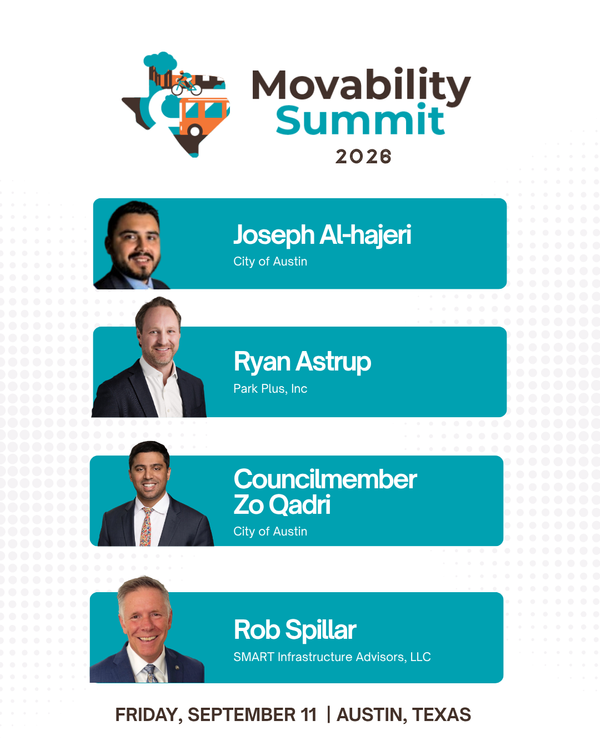
Panelists
Joseph Al-Hajiri is the Parking Enterprise Manager for the City of Austin within the Transportation and Public Works Department. He oversees mobility demand, curb management, and the shared mobility programs, specializing in modernizing transportation planning and parking operations.
Ryan Astrup is an architect, specializing in automated parking structures, high-density vehicle storage and retrieval systems. He leads project management and installation of projects for Park Plus, Inc. where he currently serves as a Sr. Vice President. More information on high-density parking technologies, including project videos and demonstrations can be explored at www.ParkPlusInc.com.
Councilmember Zohaib “Zo” Qadri The first-born child of immigrants, Zo Qadri is the first South Asian American and Muslim elected to serve on the Austin City Council. He was elected to represent District 9 in 2022 and serves the residents of some of Austin’s oldest neighborhoods, including Travis Heights, Hyde Park, and Downtown. He is committed to tackling Austin’s housing crisis, fighting for an expanded and equitable transit system, and protecting and uplifting Austin's most marginalized residents. He currently resides in Central Austin with his wife, Wafa, their son, and their cat, Daisy Mae.
Robert Spillar is a former director of the Austin Transportation Department, responsible for the City’s multimodal transportation program. At the City of Austin, he oversaw the reinvestment in the City’s on-street parking management system, transitioning from antiquated independent meters to modern kiosks and digital single-space meters. He was responsible for subsequent modernization of the system, implementing cell phone parking operations throughout Austin and other technological upgrades. He has served in a similar professional leadership for the Seattle Department of Transportation, rebuilding the on-street parking management program for Seattle as well. In 2025, Robert formed SMART Infrastructure Advisors, LLC where he serves as President and Lead Advisor, assisting new technology firms focused on mobility gain their footing in communities throughout Texas. He also advises urban communities on mobility and infrastructure investments. He serves as a member of the Movability Board and also on the Austin-San Antonio Corridor Council Executive Committee. More information on Robert and his activities can be explored at https://smartinfrastructureadvisors.com.