
Innovative and Actionable TDM Research Findings, Strategies, and Tools
This session will highlight three key transportation demand management (TDM) strategies and corresponding tools related to: (1) Reducing Parking Cruising; (2) Parking Cash-Out; and (3) Carpooling Innovations. Allen Greenberg from the Federal Highway Administration (FHWA) will present. Attendees will learn about appropriate applications of these strategies and how they can reduce traffic congestion, improve safety, and enhance mobility.
Cruise Detector: When parking is in high-demand, and supply is constrained, drivers may respond by circling or “cruising” for parking, thus creating unnecessary congestion. Directing travelers to open parking spaces, and disincentivizing cruising by raising parking prices when and where parking is in highest demand, would make multi-modal travel alternatives relatively more cost-effective, and result in reductions in congestion and faster bus travel. The Cruise Detector tool analyzes GPS data to identify routes taken by drivers searching for parking. This tool quantifies inefficient routing or ”cruising” including related to parking availability and knowledge, pinpoints cruising hotspots, and helps in assessing policy interventions.
Parking Cash-Out: Offering commuters cash to not use a parking space at work encourages them to carpool, vanpool, take transit, bike, or walk, instead of driving alone. Modeling of the effects of potential city-level parking cash-out ordinances of five different varieties on vehicle travel in nine cities projected:
• Vehicle Miles Traveled (VMT) Reduction: Monthly cash-out is projected to reduce commute VMT in Houston by 3% (and up to 13% in other cities modeled), versus by 7% (and up to 21% in other cities modeled) for daily cash-out combined with pre-tax transit requirements.
• Reduced Delay: Monthly cash-out programs are estimated to reduce delay in Houston by 1.1 million hours annually (versus 800,000 hours on average among all the analyzed cities) and 2.6 million hours annually for daily cash-out combined with pre-tax transit requirements.
Ridepooling in lieu of Solo Ridehailing: FHWA developed a tool by analyzing survey data conducted by a large transportation network company (TNC) in 15 U.S. cities, including Austin, coupled with appended demographic and trip data, to ascertain the impacts of changing private-party and shared-party TNC pricing and trip times on customer choices.
The survey presented TNC customers additional options for predicted trip-arrival-time and price associated with either a solo or shared travel choice for a trip they just took. Relative changes in trip + wait times (through pick-up prioritization) were found to impact customer decisions to share or not to share much more (by a factor of three) than changes in costs.
Applying the tool, compressing the difference in duration between shared and drive-alone trips (including wait time for pick up) by 5 minutes roughly doubles the proportion of TNC trips that customers choose to share from 26 to 51% in Austin. Bus and shared TNC prioritization is in part justified since these modes are used by 7.9 times as many total travelers as solo TNCs in Austin.
FHWA is also supporting innovations in single-trip carpooling (building off of the “slugging” phenomenon taking place on the Katy Freeway in Houston and elsewhere), which will be discussed.
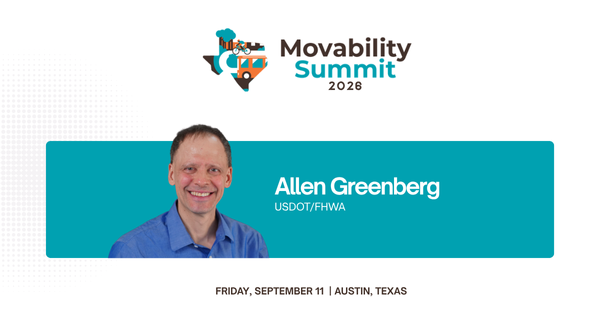
Speaker
As a senior policy analyst at FHWA for over 25 years, Allen Greenberg has played a leadership role in transportation policy and operations, focused especially on demand management, parking pricing and management, innovative carpooling strategies, pay-as-you-drive insurance, and shared mobility. He is a prolific author of technical outreach documents, research papers, and reports, and speaks regularly at professional conferences. He holds a Master of Urban and Regional Planning from the University of Virginia and a Bachelor of Science in Public Policy and Management from Carnegie Mellon University.